The food argument
A meal becomes a policy story.
The “halalflation” chapter follows the move from a familiar street meal to an argument about prices, work and city policy.
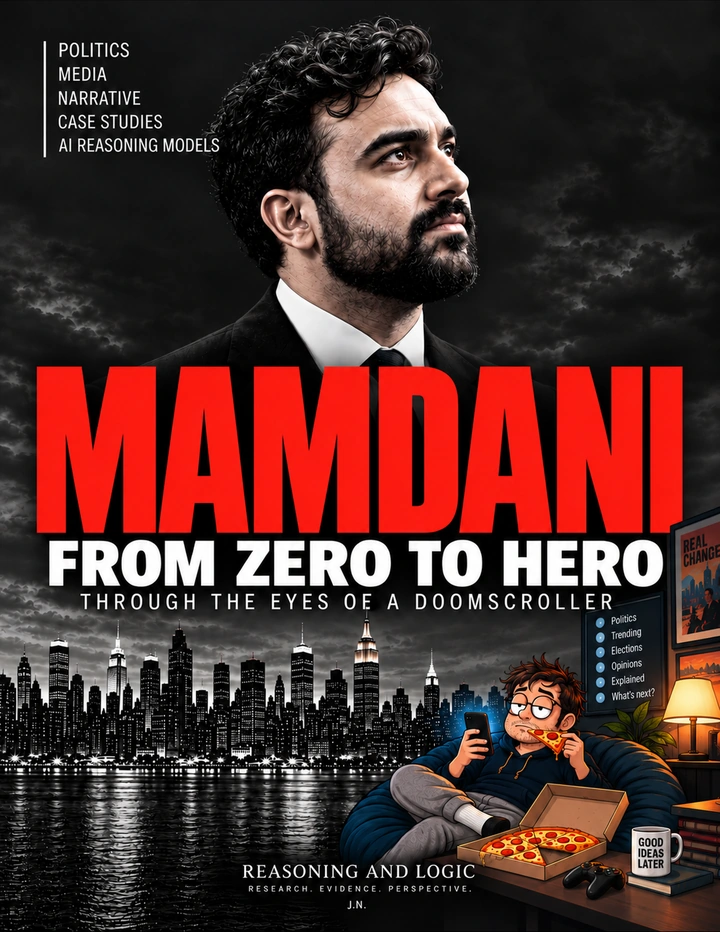
A political rise. Seen through the feed.
Through the Eyes
of a Doomscroller
A political rise first seen as fragments in a feed, then reconstructed as a dated public record.
The book follows Zohran Mamdani from early campaign clips through organizing, fundraising, polling, endorsements, elections and the first governing tests. It rebuilds the sequence from public evidence so the reader can see what changed, what was visible at each stage, and which explanations remain uncertain.
For readers of politics, media and campaigns who want a clear story of the rise, source-linked evidence behind it, and a method for separating attention, support, organization, money, narrative and governing reality.
$19 USD · book + all companions
One 21-file digital ZIP · Email delivery within 5–15 minutes after payment verification
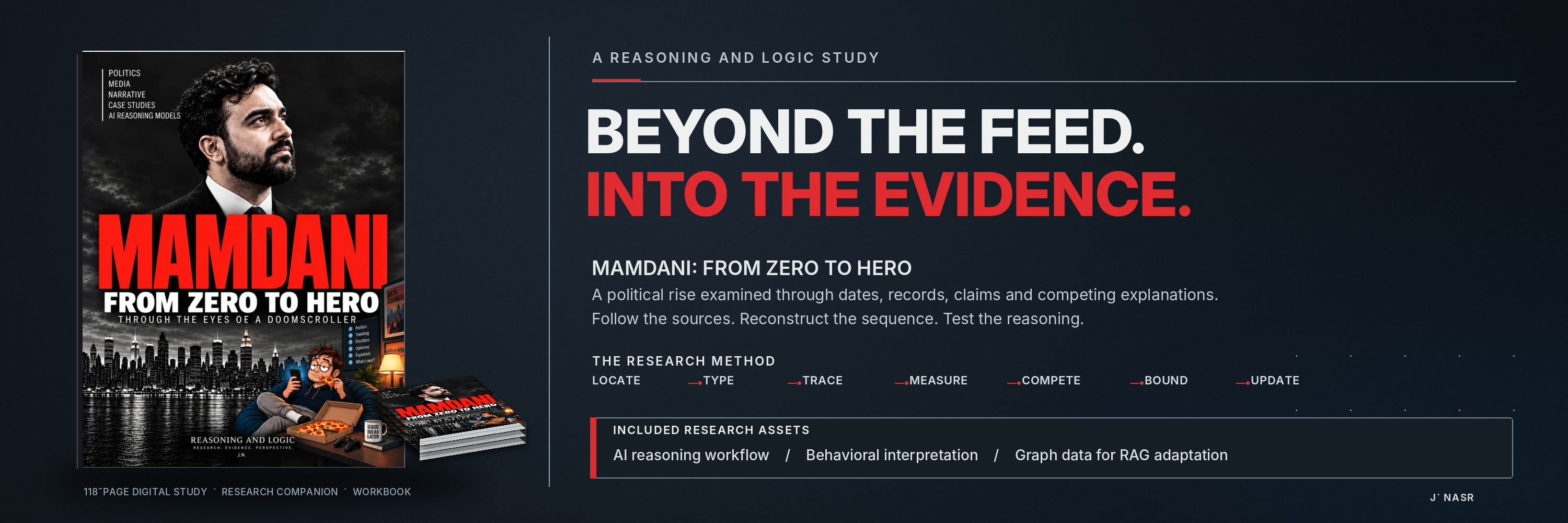
The story
The narrative begins when Mamdani is still a recurring face in a feed and measured support is low. It then follows the campaign through food-price messaging, rent policy, canvassing, public financing, endorsements, the primary, the general election and the first tests of governing.
The point is not to turn one tactic into the explanation. The book shows the sequence, the evidence attached to it, and the places where several explanations remain plausible.
“Zero” marks the opening of the tracked online sequence. “Hero” describes the public narrative position being examined. The book is independent analysis, not a campaign endorsement or a whole-life biography.
Sample the book
These examples show the book’s narrative style, evidence discipline and visual reasoning before you decide whether to buy it.
The food argument
The “halalflation” chapter follows the move from a familiar street meal to an argument about prices, work and city policy.
The one-percent problem
Campaign content and canvassing already existed when February polling put support near one percent. The book asks what changed after that point.
The governing test
Rent, childcare, groceries and buses reach different stages of implementation. The story continues beyond the victory speech.
Who can benefit
The Mamdani case is the worked example. The accompanying reasoning framework provides prompts, procedures and structured examples for examining other public cases.
Students & researchers
Trace dates, claims, polling, financing and organizing records without treating chronology as proof of cause.
Media & communication analysts
Compare clips, messages, repetition, timing and coverage while keeping measured support and public records separate from interpretation.
Writers, strategists & consultants
Build a timeline, separate claims from evidence, compare competing explanations and keep unsupported conclusions out of the final analysis.
What you get
The complete package includes the main narrative, the research companion, workbook, visual plates and reusable reasoning material.
Research companion
The 116-page Research Companion, which overlaps with the main book, contains source references and research detail. Five CSV ledgers help you trace claims back to their records.
Study workbook
Ten exercises with worked answers: check dates, compare rival causes, and separate visible activity from measured outcomes.
Reader visuals
Twelve visual plates, also included in the main book, collected separately for closer inspection with text equivalents.
Reasoning framework
A practical guide, two prompts and structured JSON examples help organize a new inquiry. These are readable models, not an app.
Read before you buy
Read the first 19 pages, inspect the chapter examples above, then continue with the complete 118-page book and all listed companions.
$19 USD · one-time payment
Events through 23 September 2026 · Source review through 25 September
$19 USD · Digital book and companions · Email delivery within 5–15 minutes after payment verification